

The world runs around finance. In fact, we can say it’s the most critical aspect of every business organization and even an individual. But with the growing number of cyberattacks and fraudsters, financial risks are increasing like never before.
It’s none other than financial scams, standing as the most significant challenge today. Alongside, it’s also one of the most complex issues fintech companies face today.
According to the Federal Trade Commission, consumers reported a loss of more than $12.5 billion in 2024, which represents a 25% increase from last year.
Billions of transactions take place online, which allows cybercriminals to take advantage of this scenario and become more sophisticated. Alongside the emergence and rapid buzz of AI, it is becoming more reactive.
They are always on the hunt to exploit new vulnerabilities, putting organizations and businesses at a loss. Anyone can be a victim of financial fraud, from students and senior citizens to C-suite leaders.
But wait! You can surely be aware of these risks and avoid the associated losses. Don’t worry, we’ve created this in-depth guide to help you understand everything about financial types and more.
So, don’t miss out on the blog. Read it till the end!
Breaking Down the Definition of Financial Scams
The definition is quite simple: financial fraud is basically the act of creating a loss of money or property through dishonesty. In short, consider this example: you receive a call from the bank asking you to share your account details. Here, you think it is legitimate, but you fall into the trap of financial risk.
These types of scams cause significant harm to people and organizations, extending beyond financial loss to encompass a broader impact. However, this will not fill the void of the damage to the reputation and trust it brings.
The tactics used by scammers are straightforward; they create a sense of urgency, prompting individuals like us to act hastily and disclose sensitive information, such as passwords and bank account details, which can then be used to transfer funds.
In today’s digital era, where people share their details on social media or public forums, it becomes easy for scammers to make the scheme more convincing and target people around.
For instance, a fraudster may send an email pretending to be a firm executive, asking for an urgent wire transfer to complete a deal that is essentially a fake business transaction. As a result, there may be a significant financial loss as well as organizational disruption.
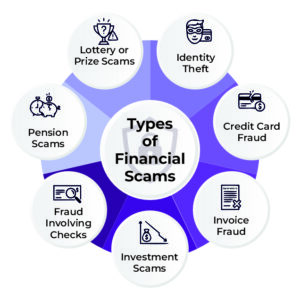
Sharing the Types of Financial Scams
Following are some of the common types of financial scams:
1. Identity Theft
Identity theft is one of the most common types of fraud. It occurs when someone uses false techniques to obtain your personal information, such as your bank account number, credit card number, and other financial details, thereby moving towards financial scams. The stolen data is used to carry out false activities such as:
- opening bank accounts
- applying for loans
- carry out unauthorized transactions and more without your consent
- Checked bounced
- Utilities are being shut down
So, make sure you’re well-informed and aware of these types of identity fraud that can put your financial as well as personal status at risk. Consider freezing your bank account or canceling your credit card immediately if you've fallen victim to a financial scam.
2. Credit Card Fraud
Credit cards have become the primary method of payment. The number of credit card users alone in the US has increased to.....Thus, there’s a significant increase in credit card fraud. The frauds happen when someone uses your credit card details without permission to make payments or purchases.
Bad actors usually steal information through various mediums, such as hacked websites, phishing scams, or other means. To avoid credit card scams, regularly check your statements for any unknown transactions or charges. If you happen to find one, report it immediately to the bank authorities.
The following are some of the ways you can protect yourself from financial scams, such as credit cards:
- Enable two-factor authentication wherever possible.
- Report immediately if you have lost your credit card or have noticed any suspicious activity on it.
3. Invoice Fraud
Invoice comes where businesses exist! One of the prevalent scams that mainly targets businesses is invoice fraud. Here, scammers deceive organizations into sending money to false accounts. The technique involves sending phony invoices that appear authentic, acting as a reliable business supplier or other.
They appear to be known contacts and deceive the company's team using the social engineering technique. Meanwhile, the fraudsters create a sense of urgency, leading you into financial scams.
How to identify and stop fraudulent invoices:
- Make sure to check every payment request, especially if the bank information has been changed.
- Before the suspicious messages reach employees, identify and prevent them using trusted cybersecurity methods.
4. Investment Scams
Investment scams are primarily the type of financial scam that comes through social media. This can happen through celebrity endorsements or through hacked accounts from someone you may know. Moreover, scammers can also reach you via phone, email, or more.
The basic concept remains the same: you are compelled to invest in a company, product, or other entity that does not truly exist. After you choose to invest, the scammer takes your money away.
Here is an example: You get a message through social media from a popular celebrity, saying, “Our brand is currently offering free coupons for wellness. “When you see this account, you find it legitimate, you even initiate the funds transfer but later know that the account never existed.
5. Pension Scams
The pension freedoms came into effect in 2015. Since then, retirement savers have had longer sums from their pension. This has become a potential spot for scammers to take advantage of their savings. Scammers usually force the victims to invest in high returns with less risk. Senior citizens, or those who are retired, are often the victims of pension scams.
Signs of a possible pension scam:
- Be aware of unexpected contact through email, phone, or social media.
- An offer that gives high returns can be suspicious.
As we know, cold calling about pensions has been stopped since 2019. However, there are still people who attempt to go in person and trick others into the scam.
6. Lottery or Prize Scams
Did you ever get a call saying you’ve won Rs. 1,000 through a lottery? Scammers in this scenario can contact you through email, text, or phone and ask for higher payment for taxes or other costs.
They act like legal representatives of a federal organization. So, do not provide anyone with personal information. Alongside, do not pay in advance for a prize that has been promised.
7. Fraud Involving Checks
As the name suggests, this involves using money to obtain money. This could be the result of checks that have been stolen, altered, or forged. These typically appear when a scammer intercepts a check in the mail.
The most common types of check fraud include:
- Altered checks
- Forged checks
- Unauthorized checks were debited from your account
- Missing checks
How to Protect Yourself from Financial Scams?
You cannot wholly avoid financial scams, but you can definitely take the proper measures to be vigilant and avoid falling victim to these attacks.
Share information wisely: Avoid sharing your personal information randomly on the internet. Keep your information private on social media—meaning, only with the people you know.
Keep financial information private: Do not share your financial information with anyone, be it your bank details, credit card numbers, or others, even with your friends or loved ones.
Be cautious with links and emails: Be wary of links in emails or messages. Think twice before clicking on any link, as it may redirect you to malicious or fraudulent sites.
Confirm request carefully: You need to know that with the tech advancements, scammers have started using AI to impersonate voices. Always confirm when sharing your information with anyone who asks for it.
Partner with your bank: Financial institutions offer the necessary resources to keep your accounts secure and safe from fraudsters.
Summing up the Blog - Security is Your Priority!
Financial scams are booming at the fastest pace. In fact, it also takes many new forms, making it difficult for ordinary individuals to stay one step ahead of the same. However, staying vigilant and creating awareness can surely be helpful and act as a strong shield.
Hope the above blog has clarified everything related to financial fraud and how to implement the right tactics at the right time to stay safe in today’s digital landscape.
Recognizing scammers is difficult; you can get fooled at any time. So, act smartly before it's too late! Your time and safety start today.
We keep you updated with all the latest topics around the cybersecurity landscape, so keep in the loop with us to know more.
Frequently Asked Questions
Q1. Do banks give the returns of the scammed money?
Ans: Banks can provide you with the return of the money if your account is hacked or used without your permission.
Q2. How can you identify scams?
Ans: Following are some of the ways you can identify financial scams:
- Do not share your personal information, credit card details, or other sensitive information.
- Do not pay for any upfront costs for the prize that is promised
- Deals that amaze you with huge offerings
Read More:
How to Spot and Avoid Fake CAPTCHA Scams?
How to Combat Online Scams and Stay Secure in the Digital Age?
Safeguard Your Finances: Top Financial Sector Cybersecurity Methods to Consider
Digital Arrest Scams: How You Can Protect Yourself from the Modern-Day Cyber Scam