Cybercriminals have always targeted gamers, as they own high-spec PCs, valuable gaming accounts, and are eager to access new game releases. This makes them susceptible to scams. Typically, gamers are tricked by fake websites, fake beta invites, or early-access offers that create a sense of urgency.
In most cases, the aim is simple: to steal personal information, money, or to direct users to malicious links. With Grand Theft Auto VI (GTA 6) launching on PlayStation and Xbox Series X/S on November 19, 2026, scammers have begun circulating fake beta invites and early access offers to trick gamers.
Knowing how to spot such scams is the first step toward staying away from the deceptive practices of cybercriminals. This blog breaks down the details on how you can spot fake game beta invites and early access scams, alongside a real-world example. Let's get started.
What Are Fake Game Beta Invites and Early Access Scams?
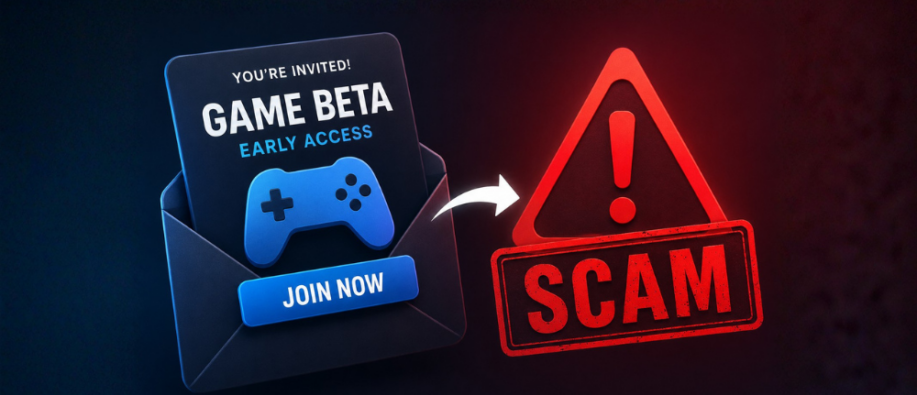
Lately, there has been a buzz about cybercriminals spreading fake game beta invites and early-access offers. These are fraudulent methods used by attackers to trick gamers. They claim to give you early access to the beta test version of the awaited new game. Alongside these promises, scammers create fake websites, emails, and ads that imitate official game publishers. They assure early access to games if you log in with gaming account credentials or pay a fee in cryptocurrency.
Cybercriminals also send fake game invite links in emails that redirect users to download malware, infecting the entire device. To reduce such risks, make sure to follow the official game developer website for any demos, game releases, and access.
Some Common Gaming Scam Tactics
There are different methods by which users can be tricked into the gaming scam. Below, we have mentioned them.
Scam method |
What does it aim to do? |
| Fake beta emails | Steal login credentials or trick users into clicking on malicious links that lead to fake login pages or malware downloads. |
| Social media giveaways | Fraudsters collect personal information or ask for participation fees. |
| Fake pre-order websites | Collect payment details for games that never come. |
| Game installers | Infect devices with malware or ransomware. |
How Fake Beta Invite Emails Trick Gamers?
One of the most common gaming scams starts with an email claiming you've been selected for an exclusive beta program. The emails appear professional, with official logos, game artwork, and convincing language that creates a sense of urgency.
Clicking on the embedded link redirects users to a fake login page that steals usernames and passwords or installs malware on the device. In some cases, players are asked to pay a "registration fee" or verify their account before receiving access. These tactics are mainly designed to exploit excitement before gamers verify whether the invitation is genuine.
Why Do Gamers Fall for Fake Beta Invites?
Scammers are smart people who know how to fool people by creating a sense of urgency or by offering something that looks attractive at first glance.
- Early Access is a Thing in Gaming: Players are always keeping an eye on their favorite games going live soon. They are familiar with common terms such as early access programs, VIP access, premium editions, and so on. These terms easily trick players into grabbing the game deal or signing up.
- Realistic Fake Websites: Scammers create websites that closely resemble official gaming pages. This can confuse the user, leading them to believe they are on a trusted site and enabling them to share personal or account-related information.
- Urgency Phrases: “Buy VIP early access”, "Exclusive access”. Websites showcase these types of phrases that create urgency and urge the players or users to act quickly without a second thought.
- Social Media Misinformation: There are fake posts, ads, and impersonated accounts spreading on social media. This misleads users into believing there are exciting gaming offers.
- Fear of Missing Out (FOMO): Players are so excited that they get a FOMO of beta invites, fake early access and rewards that make them act quickly.
Case Study: GTA 6 Fake Beta Invite Scam
The GTA 6 scam is a fraudulent activity that exploits the popularity of the Grand Theft Auto VI game to trick gamers. It's one of the most talked-about examples of fake gaming promotion in 2026.
Scammers are taking advantage of the hype by creating fraudulent websites that impersonate Rockstar’s official site and promise users early access. The sites are designed to be legitimate, showcasing Vice City-Style neon visuals, luxury cars, and more. They include urgency-based pitches to capture players' attention and prompt them to click malicious links, share sensitive information, or download malware.
These scams promise the following:
- Early access to GTA 6.
- Discount pre-orders.
- Exclusive in-game rewards.
- Beta testing invitations.
However, in reality, none of these offers are real unless announced by Rockstar Games through its official channels. They send unsolicited links on platforms like Discord, YouTube, or Steam promising early access to GTA 6.
Risks of Fake Game Beta Invites and Early Access Scams
Below is the impact if you get into the trap of the scam.
- Financial losses
- Loss of personal information
- Stolen gaming accounts
- Compromised email accounts
- Malware installations
- Unauthorized access to online payment methods
How Can You Avoid Fake Gaming Scams?
Make sure you do not fall for hackers' tricks. To avoid the same, follow the best practices mentioned below:
- Verify announcements through official game publishers.
- Never trust links that are shared through unofficial websites.
- If any website is asking for cryptocurrency for early access to a game, it should be considered suspect. Game publishers or companies do not ask for crypto payments.
- Double-check for website URLs before entering account credentials.
- Enable multi-factor authentication (MFA) for gaming account credentials.
- Users who have sent cryptocurrency and were scammed should not make any further payments, even if the site is requesting additional payments.
- Report suspicious emails, social media accounts, and websites.
Bottom Line: Don't Fall for Early Access Offers
New game launches are always a point of discussion and excitement for gaming enthusiasts. However, gaming scams are becoming increasingly sophisticated, so the best way is to stay ahead and think before you act. Protect all the key information, including your personal information, gaming account, and financial details.
If a deal feels untrustworthy, a link looks shady, or someone is insisting that you take action, pause and think twice before you click. There is no shortcut to getting early gaming access. It's all in your hands to be aware of the fake game beta invites and early access scams.
To stay aware of all the recent cybersecurity-related blog picks, visit our website now!
FAQs
Q1. Is it safe to click a beta invite link shared by a friend or in a group chat?
Answer: No, it isn't safe to click on a beta invite link shared by a friend or in a group chat. It can lead to suspicious websites, pages, or malware that can steal your information.
Q2. Are legitimate game beta programs free?
Answer: In most cases, yes. Legitimate beta programs offered by gaming providers are free to join. However, players should be cautious if any website asks for payment, especially in cryptocurrency, or for beta access.
Q3. Can scammers still get access to my account even if I didn't pay them money?
Answer: Yes, scammers can gain access to your account if you enter the gaming account credentials, or click on a fake invite link, even if you do not make payment.
Recommended For You:
How to Combat Online Scams and Stay Secure in the Digital Age?
What to Do If You Get Scammed on Facebook, Messenger, & WhatsApp – New AI Protection Tools Explained