Phishing has become a common threat to individuals and organizations today. Such attempts often provoke people to click on malicious links through approaches that seem legitimate. As a result, individuals end up downloading malware on their systems and lose personal information to attackers.
According to sources, 90% of cyber-attacks start with phishing attempts. In 2024, over 3.4 billion phishing emails were sent daily. Around 90% of companies worldwide experienced phishing in 2024. One major reason for such a surge in phishing is the inability to identify and report such attempts.
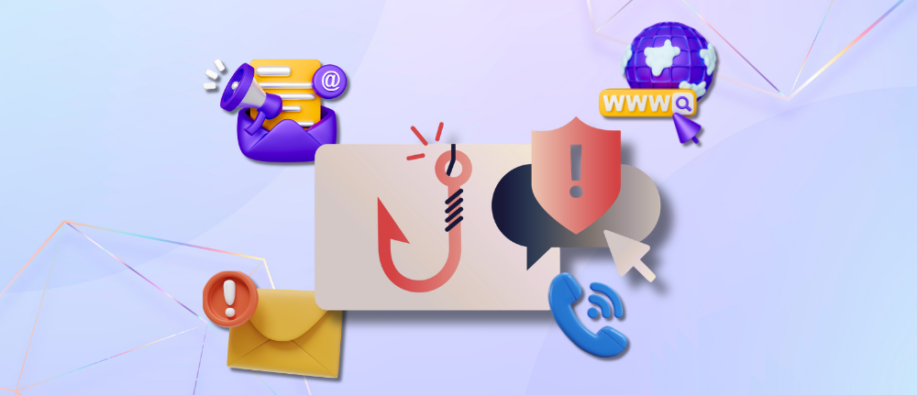
Attackers generally run campaigns across email, call, message, and website to execute phishing attacks targeting multiple victims at a time. Hence, disrupting such campaigns through reporting is important to stop the phishing attempt from succeeding.
Wondering how to report phishing across platforms? Here is a guide...
How to Report Phishing Emails?
Emails have been a highly preferred way for attackers to execute phishing attempts. Sending legitimate-looking emails that include malicious links is a common method of committing online fraud.
Even if your email provider has a spam folder to filter out spammy emails, attackers have advanced their strategies, making it tough to detect phishing emails. To tackle this situation, email providers include built-in tools to allow users to report phishing emails from their inboxes. Let us discuss how to report phishing emails from diverse providers.
Reporting Phishing on Gmail:
Gmail enables you to report malicious emails directly from your inbox. Here are the steps to follow-
- Open the mail that seems suspicious to you.
- Click the icon of three vertical dots in the top-right corner, next to the reply button.
- Click on Report phishing.
- A pop-up note will appear; tap Report Phishing Message.
Reporting Phishing on Outlook:
Outlook offers a built-in feature to report phishing emails. Here are the steps you can follow in this regard-
- Open the suspicious email and click the Report button on the toolbar.
- A pop-up will appear with the note for Report phishing, click on Report and Block.
Reporting Phishing on Apple Mail:
Apple Mail does not have a specialized option or feature to flag a phishing email. Users can rather report an email as Junk. This step redirects further emails from the same sender to the Junk folder only. Follow the steps mentioned below and move malicious emails to the Junk folder in Apple Mail.
- Right-click on the malicious email in your inbox.
- Click on Move to Junk.
How to Report Phishing Messages and Calls?
Fraudsters have gone beyond emails to execute their phishing attempts across various channels. Phishing through SMS or text messages is known as smishing. On the other hand, phishing attempts that involve phone calls and voicemail are known as vishing.
Across the US, UK, Canada, and Ireland, specific service providers allow users to forward spammy text messages to 7726, which spells SPAM on the keypad. Similarly, several other nations use different codes, using which individuals can report smishing attempts.
Report Smishing on Android:
- Long-press a message and click on the three vertical dots icon at the top-right corner.
- Click on Block from the drop-down menu.
- In the pop-up, tick the Report and spam, and press Yes.
Report Smishing on iPhone:
- Swipe left the malicious SMS in the Messages app.
- Click the Delete icon.
- In the following pop-up, press Delete and Report Spam.
Report Vishing Phone Calls:
You can report vishing calls directly to the cybercrime and consumer protection agencies, authorized by the government authority of your national government.
Ways to Report Phishing Websites:
Malicious websites are often designed to victimize visitors, encouraging them to share their personal information, including names, addresses, email addresses, phone numbers, and even financial details. On many occasions, such websites include suspicious links, clicking which can cost users giving away their personal information to scammers.
Google:
Users can use Google Safe Browsing to stay safe from phishing websites. This step generates security warnings in browsers that lead to restricted visibility of suspicious sites. Users can fill out Google’s online report form to flag suspicious websites.
Microsoft:
Microsoft offers Defender SmartScreen that secures users in Microsoft Edge. When users report phishing websites, it can lead to site blocking. Use Microsoft’s online report form to take step against malicious websites.
Why Should We Report Phishing?
Reporting phishing attempts helps identify malicious actors involved in phishing campaigns. This can further help in blocking spammy sources and safeguard your personal information from scammers. Reporting phishing attempts also offers opportunities for stronger security frameworks across an organization.
Reporting phishing attempts helps with early threat detection. Phishing can lead to personal data exposure, financial loss, emotional damage, and other consequences. So, early detection of phishing reduces such possibilities. In short, reporting phishing attempts shows how aware users are in the digital world while contributing to effective threat detection and mitigation.
In case you click on any phishing link without significant awareness, change passwords on your device immediately, and contact your bank immediately. Following that, scan your device for malware, and monitor all your accounts across platforms continuously.
Stay Vigilant and Protect Your Digital Safety!
The digital shift across domains has been a key reason for enhanced cyber threats. Scammers and attackers are becoming more advanced with strategies that often go unnoticed due to limited awareness. However, we are responsible for our own digital safety; hence, staying vigilant is crucial.
While combating phishing attempts, it is important to be considerate about which websites you visit and what you share on digital platforms. Refrain from opening emails and messages from unknown and unauthenticated sources. Alongside that, not receiving suspicious calls from unknown numbers can also be helpful in this regard.
Never miss an opportunity to learn about emerging cyber threats and mitigative practices; visit SecureITWorld now!
FAQs:
Q1. Is it better to delete or report phishing emails?
Answer: Reporting phishing emails helps track scammer details, which can also help disrupt the campaign and catch the scammers. Deleting only removes the phishing email from your mailbox.
Q2. Can I report phishing in Gmail?
Answer: Yes, you can report phishing emails on Gmail by following the steps we have discussed above.
Recommended for You:
Phishing Attempts via Email: The Need to Detect and Avoid Them for Online Security