Industrial robots have transformed the way manufacturing industries operate. These robots help boost business productivity to the next level while maintaining precision, accuracy, and efficiency. Robots can perform tasks in the blink of an eye that humans might need a day to complete. Alongside, they also improve worker safety and help prevent on-site accidents. But what if the robot falls victim to a cyberattack?
Well. This becomes an alarming situation! Here comes the need for robot cybersecurity for the ultimate safety of robots and industries adopting it. According to stats, the cybersecurity in robotics market is anticipated to be valued at $4.7 billion in 2025 and is expected to reach $14.3B by 2035 with a (CAGR) of 11.7%.
Let’s discuss more in the blog.
Understanding Robot Cybersecurity
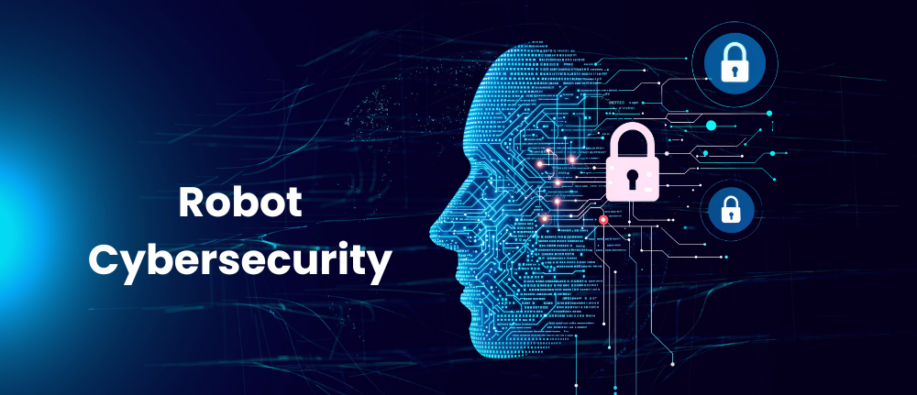
Robot cybersecurity is the method of securing robotics systems, such as industrial robots, collaborative robots (cobots), and autonomous machines, from cyberattacks that may compromise their functionality, reliability, and safety.
Alternatively, in traditional IT systems, robots operate in cyber-physical space, meaning that a cyberattack can result in real-world consequences, such as equipment destruction, production issues, or physical harm to workers.
Common Types of Threats in Robotics
1] Unauthorized Access Control
Attackers can gain access to robotics systems, resulting in malicious activities or even causing physical damage.
2] Data Manipulation
Weak communication mediums can leak sensitive data or send false commands to machines.
3] Supply Chain Vulnerabilities
Poor third-party software, firmware, or updates can introduce a backdoor that is not immediately visible; thus, robots are vulnerable to attacks even before they are implemented.
4] Network-Based Attacks
A lack of network segmentation allows attackers to laterally move between IT systems and OT systems and robots, increasing the risk of a single attack.
5] Ransomware and Malware Infections
If engineering workstations, infected HMIs, or file transfers are targeted by cyberattacks, it can stop manufacturing operations.
Importance of Cybersecurity in Robotics
Cybersecurity is of utmost importance in industrial robotics. It helps to keep robots secure in all aspects. A compromised robot can lead to physical damage, stop production, and loss of finances. Robots in industries are related to PLCs, OT networks, AI, and IoT systems. A single compromise in the system can affect the complete production atmosphere.
-
- Robust robotics cybersecurity helps organizations in:
- Safety of workers by avoiding unauthorized control of robots.
- Ensures no downtime through reducing threats and ransomware infections.
- Provide quality and production system data integrity.
- Protect intellectual property and robot writing.
- Adhere to regulatory and industrial safety.
In the scenario of manufacturing industry 4.0, cybersecurity is no longer an option; it is essential for developing secure, resilient, and future-proof robotic operations.
Cybersecurity Standard Automation
There are certain sets of standards set by the International Electrotechnical Commission (IEC), in agreement with the International Society of Automation (ISA). It mentions procedures for the implementation of secure Industrial Automation and Control Systems (IACS)
The ISA/IEC 62443 standard comprises 7 foundational requirements (FR):
-
- FR 1: Identification and authentication control (IAC)
- FR 2: Use control
- FR 3: System integrity
- FR 4: Data confidentiality
- FR 5: Restricted data flow
- FR 6: Timely response to events
- FR 7: Resource availability
If all these requirements are met, industrial robotics cybersecurity is preserved.
Top Practices for Securing Industrial Robots
Here are a few practices you can follow to maintain the security of industrial robots.
1] Strengthen Access Controls
Access control has a significant impact on security. Using least-privilege access can control who can configure, program, or maintain robots.
2] Strong Communication Channels
Privacy between data between robots, controllers, and control systems should all be encrypted. Good communication helps avoid tampering with commands, data leaks, and man-in-the-middle attacks.
3] Patch and Update Control
It is necessary to keep the systems up to date. Failure to patch can put you at risk, as attackers can inject malicious code and interfere with the behavior of robots.
4] Monitoring Continuously
Make sure to track robot behavior, network traffic, and system logs in real-time. This helps detect faults early and respond before they get out of control.
Summing it Up
The future of robotics is promising; however, security is a crucial aspect that cannot be overlooked. Keeping cyberattackers at bay can help achieve secure, productive organizational goals.
Hope the above blog has helped you better understand robot cybersecurity and unlock the full potential of industrial robots while maintaining security. Your gateway to full-fledged industrial automation starts now, and yes, with safety in the first place.
To check out more informative blogs, visit us here!
FAQs
Q1. What are the big 4 of robotics?
Answer: The big 4 in industrial robotics leading the market are: FANUC, ABB, KUKA, YASKAWA (Motoman).
Q2. What is robotics cybersecurity?
Answer: Robotics cybersecurity is the practice of protecting robotic systems, such as industrial robots, cobots, drones, and others, from cyberattacks and other digital threats.
Recommended For You:
What is the Role of Artificial Intelligence in Cybersecurity?