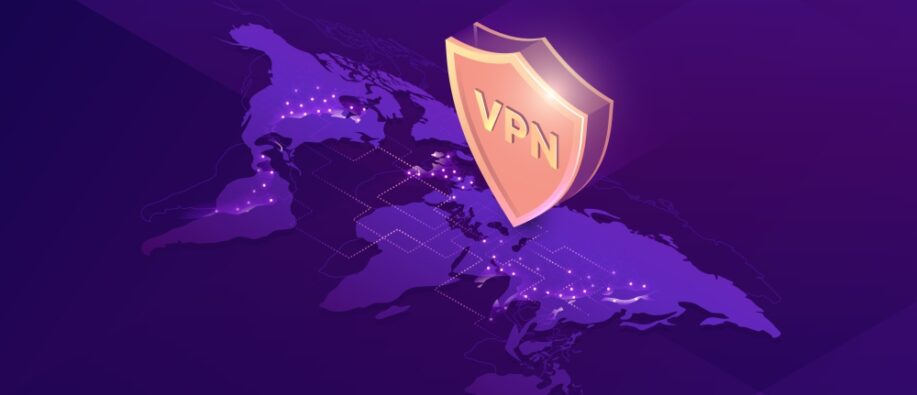
Want to hide your browsing activity? Need to access public Wi-Fi, a Virtual Private Network (VPN) is the ultimate security solution. It plays a key role in hiding your activity and keeping you secure online. Research indicates that half of the internet users use VPN for general security reasons such as identity theft.
While VPN comes with a range of benefits, such as hiding IP addresses and encrypting internet traffic, it does come up with a few limitations that shouldn’t be overlooked. Ignoring it can put you in the trap of digital threats. This blog explicitly discusses the limitations of VPN protection in today’s cyberthreat landscape.
Knowing the VPN Protection Limitation
Let’s discuss them below:
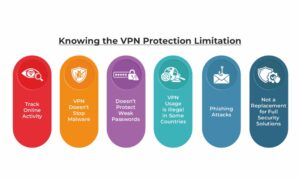
1] Track Online Activity
While some VPNs protect the user’s activity while browsing online, some free VPNs track user activity. Tracking tools embedded in their software enable VPNs to collect user information and sell it to third parties. Additionally, free VPNs log IP addresses, session details, and more. Lack of security features and weak encryption can expose users to cyber threats and data leaks rather than protecting them.
2] VPN Doesn’t Stop Malware
Malware and viruses can hit your system at any time. A VPN does not protect against malicious attacks such as viruses, ransomware, and other zero-day attacks. A VPN can encrypt internet traffic, but it cannot block suspicious links in email or infected downloads. A VPN also cannot protect against password-related attacks such as credential harvesting.
So, all individuals and organizations can do is follow best security practices, such as avoiding clicking on malicious links and downloading email attachments. Also, make sure your systems are up to date.
3] Doesn’t Protect Weak Passwords
A strong password keeps your account secure; however, a weak one can disrupt your entire account. VPN does not provide any protection against weak passwords or reused across several accounts.
Whenever bad actors have your password, they can gain access to your account, no matter if you’re using a VPN. For individuals and organizations using strong passwords, it is recommended to use a password manager, which offers the highest level of security.
4] VPN Usage is Illegal in Some Countries
Even though VPNs are widely used today, many countries and regions still ban their use. In this case, individuals who are caught using a VPN may face legal consequences. This is one of the most significant VPN limitations. Users need to consider the laws and regulations before using a VPN to avoid further problems.
5] Phishing Attacks
A VPN won't stop you from being the victim of phishing attacks. If you visit a fake website, click a malicious link, or share your details randomly, a VPN won't stop your data from being stolen.
6] Not a Replacement for Full Security Solutions
Security solutions such as firewalls, antivirus software, and endpoint security solutions cannot be replaced with a VPN. It is not just about device or network security; however, encryption and privacy need to work alongside other security tools to provide full coverage. It does not offer any threat detection, monitoring, or capabilities to block malicious activities.
7] VPN Cannot Avoid Data Leaks
Another limitation of VPN is that it cannot be used to prevent data leaks caused by user actions, nor is it an option for antivirus or endpoint protection software. It is not a complete cybersecurity solution, but rather a strong privacy layer. Human errors, along with the use of weak passwords or incorrect system settings, can expose sensitive information. Thus, you need to address data leaks and prevent information loss.
Should I Trust a VPN?
VPN is most used to encrypt your data, mask your IP address, and make your online experience secure, private, and protected. But with the above VPN protection limitation, a question arises. Should I trust VPN? Nevertheless, one should know the limitations of VPN protection before having complete trust in it.
Using a VPN does not make you an anonymous online user immune to cyber threats. Relying on VPN alone cannot provide complete security unless used with robust antivirus software, strong passwords, and secure internet use.
Wrapping it Up on VPN Limitations!
It is essential to understand VPN limitations to know when and how to use it. Not all tools provide complete protection, and VPN is not an exception. VPN can be considered a privacy booster, and not a complete security solution.
We publish all the top-trending blogs around the cybersecurity landscape. Visit us here and stay informed and updated!
FAQs
Q1. How many devices can a VPN protect?
Answer: A VPN can protect an unlimited number of devices.
Q2. What are the limitations of a VPN?
Answer: A VPN will not do anything to stop malware, phishing, or unsafe downloads; it will just encrypt your internet traffic and conceal your IP address. It is also incapable of preventing data leakage due to human error and cannot substitute for antivirus and endpoint security software.
Recommended For You:
How do VPNs (Virtual Private Networks) enhance online privacy and security?