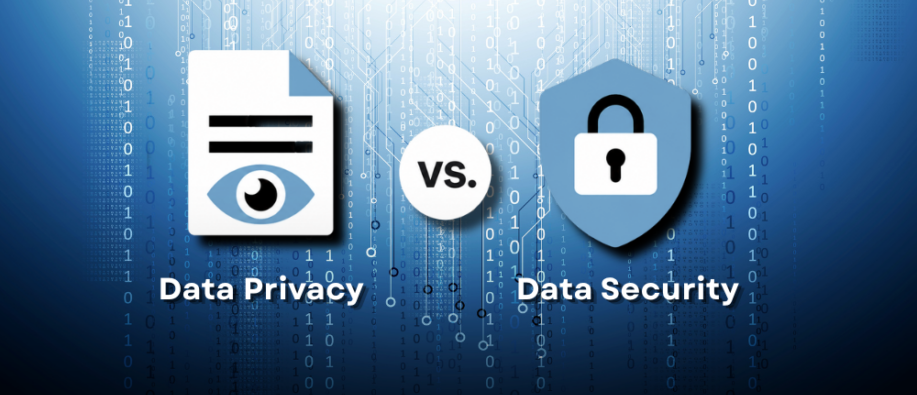
Are you concerned about whether your data is protected or not? May it be stored in a safe place that’s encrypted! But what if the team members leak the data carelessly? Well, this is a major concern. Here is where data privacy and security come into play. They are essential to cut down reputational, financial, and compliance concerns for organizations.
Though these terms are used interchangeably, they create confusion. Thus, understanding the details of data privacy vs data security goes beyond an IT issue. It’s a necessity and needs to be governed to create a solid compliance program.
The role of the audit team is vital in this scenario; they should have a complete idea of the distinctions, where they work together, and how auditors evaluate whether organizations not only protect information from cyber threats but also handle personal data responsibly and comply.
To learn more about the important distinction between data privacy and data security, and why it matters to internal auditors. Keep reading the blog until the end!
What is Data Privacy?
Data privacy is governed by policies, regulations, and practices that govern how sensitive information is collected, shared, and used by organizations. It ensures that the data is used responsibly, and in a way that’s authorized and fair. The information includes highly sensitive details such as individual contact numbers, credit card details, PAN numbers, and other biometric data that companies regularly collect.
For an internal auditor, data privacy is not just reviewing policies; it involves evaluating whether privacy controls function effectively, such as consent management, retention, secure disposal, and more. Having a clear idea of how information is handled across systems complies with regulations and supports a compliance audit.
Examples of Data Privacy Practices:
- Having user consent before collecting user information
- Limits on data collection
- Provide clear privacy policies
What is Data Security?
Data security mainly aims to protect data. It refers to the measures, technologies, and processes used to protect data against unauthorized access, theft, or attacks. Data security preserves the integrity, confidentiality, and availability of data. Every organization implements security measures to protect against mishaps. However, the degree varies depending on industry size, data volume, and other factors.
Examples of Data Security:
- Backups and storage
- Multi-factor authentication (MFA)
- Access control
- Firewalls and intrusion detection
Why are Data Privacy and Data Security Important for Internal Auditors?
Data privacy and data security are similar; however, they serve different purposes. Privacy is about how sensitive information is collected, shared, and used in accordance with ethical and legal requirements. On the other side, data security provides technical and physical measures to protect data from attacks or theft. One does not do well without the other. Security is the foundational infrastructure on which privacy is built.
Thus, internal auditors need to audit both approaches together for better results for organizations. This way, they can manage data responsibility, comply with regulations, and build customer trust through a solid data governance framework.
Data Privacy vs Data Security: The Basic Comparison
Even though data privacy and security are interchangeable in terms, it is necessary to understand the differences to frame effective strategies in place.
| Data Privacy | Data Security |
| Focus on how data is collected | Focus on how data is protected |
| Incorporates consent and lawful processing, policies | Involves preventing unauthorized access |
| Legal compliance GDPR, CCPA, data usage policies, DPDP Act | Firewalls, encryption, monitoring activity |
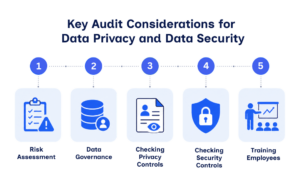
Key Audit Considerations for Data Privacy and Data Security
Internal audit teams must carefully focus on the following aspects to ensure that all security- and governance-related practices are implemented correctly.
1] Risk Assessment
Auditors need to first pay close attention to assessing risks from different perspectives.
- What type of data does the organization store?
- Who has access to the data?
- Where is it located?
- How is it protected during migration or during an acquisition?
Internal auditors need a roadmap that includes all key risk assessment factors.
2] Data Governance
Auditors should see if the organization has a strong data governance framework for managing data.
- Is there a complete data inventory?
- Are the owners clearly identified?
- Does it follow the proper governance guidelines?
3] Checking Privacy Controls
This is an important aspect auditors shouldn’t overlook. It includes the following checks:
- Consent and legal management
- Data retention and disposal
- Assess vendors and third-party providers that process information on your behalf
4] Checking Security Controls
It includes the following aspects:
- A robust security infrastructure
- Timely security updates and patch management
- Incident response plan in place
- Data encryption for safety in transit and reception.
5] Training Employees
Review training programs to ensure employees understand both privacy regulations and their security responsibilities.
Key Audit Frameworks and Global Standards for Data Privacy Regulations
Below are some of the common US and important frameworks internal auditors use for assessment. Internal auditors need to assess how security controls boost privacy compliance, ensuring both operate well.
- General Data Protection Regulation (GDPR): A privacy law with strict guidelines for collecting, processing, and protecting personal data of people within the European Union.
- California Privacy Rights Act (CPRA): This law gives consumers greater control over the personal information they typically collect.
- California Consumer Privacy Act (CCPA): California's privacy law grants residents the right to know, access, and control their personal information.
- Institute of Internal Auditors (IIA Standards): A professional standard that allows internal auditors to plan, execute, and report audits consistently and independently.
- The Virginia Consumer Data Protection Act (VCDPA): A state privacy law that gives Virginia residents rights to their personal data and mandates responsible data practices.
- ISACA COBIT: An IT Governance framework that guides organizations to ensure IT processes, controls, and compliance meet business goals.
Why Should Internal Auditors Be Aware of Both?
As AI is advancing at the fastest pace, more data is being collected than ever before. Thus, it is necessary to monitor this data closely. Internal auditors play a crucial role in the same way. They provide independent assurance that risks are well identified and managed. Security and privacy are linked, so auditors need to evaluate them both.
Auditors serve to help fill this void by assessing governance and compliance, as well as operational effectiveness. Knowing both aspects, auditors can:
- Identify Security Risks: An auditor can find potential risks that can cause data breaches, privacy violations, or cause reputational damage to the organization.
- Closely Evaluate Compliance with Privacy Laws: Closely review whether the data is collected, stored, and processed according to the privacy regulations, such as GDPR, CCPA, and others.
- Analyze Cybersecurity Controls: Auditors can ensure the right safeguards are in place, such as encryption, multi-factor authentication, and access controls, to prevent cyberattacks.
- Verify Third-Party Vendor Practices: Check out third-party providers to collect consumer data and ensure they meet all the data governance framework requirements.
- Report Findings: The auditor can produce a comprehensive report that can be presented to higher management.
The Final Takeaway!
Understanding the intersection between data privacy and data security is extremely important for audit professionals to strengthen an organization’s overall security posture and resilience. Even the most secure digital approach doesn’t work well if internal processes allow employees to handle sensitive data without proper control or oversight.
By implementing the right integrated framework, internal audits help senior management gain confidence that privacy and security are addressed effectively.
To check out more of the latest and trending posts published on our website, visit us now!
FAQs
1] What are the 4 types of data security?
Answer: The types of data security are data erasure, encryption, data masking, and data resiliency.
2] What do you mean by data privacy audit?
Answer: The main aim of a data privacy audit is to analyze an organization’s privacy protection scenario against any regulatory requirements.
Recommended for You:
Data Privacy Laws: Key Information You Need to Know About Protection and Compliance
Key Security Challenges and Solutions for Ensuring Data Privacy on Internet of Things (IoT)