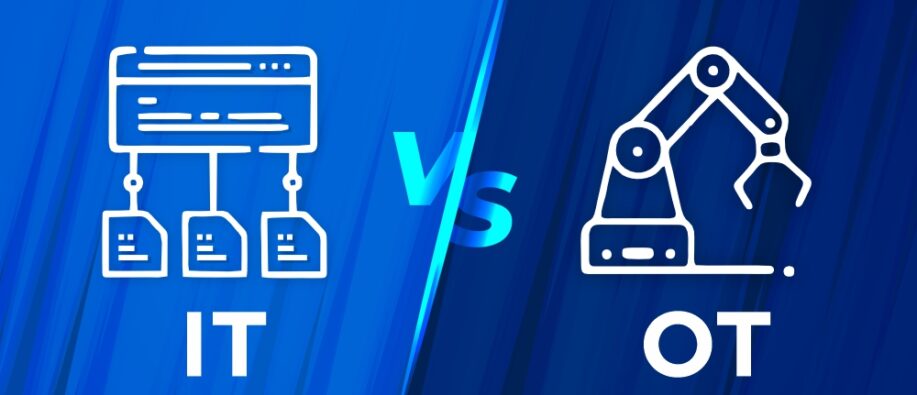
Conventionally, Operation Technology (OT) and Information Technology (IT) were intended to be managed and operated separately. However, this has changed with advancements in cybersecurity.
Businesses are no longer pondering over IT vs OT cybersecurity. They are looking toward an IT/OT convergence, which is expected to exceed 1 trillion USD by 2030.
What are IT and OT in cybersecurity, and what are their key differences? Let's get started.
Defining IT and OT Cybersecurity
Before we dive into IT vs OT cybersecurity, let us first understand these technologies.
Information Technology (IT)
Information Technology (IT) consists of the processes and tools that are used to manage digital data. Computers, software, and networks use this technology to collect, store, process, and share data in a reliable and efficient manner.
IT ensures that electronic information can be timely and securely accessed. It also supports accurate, quick task execution, and data analysis.
Businesses that rely on computers and software for their processes use IT security to protect their data. This involves:
-
- Managing and processing data
- Warranting data availability
- Supporting data confidentiality and integrity
Operational Technology (OT)
Operational Technology (OT) includes hardware and software used to monitor and control physical devices and processes within industries like telecommunications, manufacturing, and energy.
It involves particular technologies such as Supervisory Control and Data Acquisition (SCADA) and Industrial Control Systems (ICS). These systems are used to monitor, automate, and manage industrial processes in real-time.
Organizations that perform industrial operations use OT security software and hardware to manage equipment, functions, safety, and efficiency. This is achieved by:
-
- Monitoring and controlling physical instruments and processes
- Supporting crucial infrastructure
- Establishing the safe and efficient operation of machinery
Differences Between Operational and Information Technologies in Cybersecurity
There are notable differences when comparing IT vs OT cybersecurity. IT systems usually run on operating systems such as Windows and iOS. They lack autonomy and are connected. In comparison, OT systems run on proprietary software and are autonomous and self-contained. Here are the differences in detail:
Application Setting
IT cybersecurity safeguards common devices such as laptop computers, smartphones, and printers. It secures regular environments like cloud and servers with standard solutions such as firewalls and antivirus software.
OT cybersecurity secures industrial environments, which usually include machinery, PLCs, and communication across industrial protocols. OT systems do not utilize regular operating systems, typically lack conventional security tools, and are programmed differently from standard computers.
Different Forms of Safety
The main goal of OT cybersecurity is to ensure essential equipment and processes are available and safe to use. These physical devices and systems require thorough and continuous maintenance to prevent financial losses if production ceases.
IT cybersecurity services focus on privacy by helping businesses transmit and store data reliably.
Scale of Risk
OT cybersecurity services are deployed to prevent catastrophic events. Even though these systems have fewer entry points, the scale of an invasion or neglect is greater. For example, a minor incident can cause power outages or water contamination nationwide.
IT systems have more gateways since they mostly operate via the internet. Cyber criminals can exploit this system, leading to security breaches in businesses.
Patching Rate
OT networks are patched infrequently, as carrying out the process may involve halting the entire production process. Therefore, components are not always updated. In turn, operating with unpatched vulnerabilities increases the chances of a successful attack.
On the other hand, IT systems need to be patched regularly as their components evolve at a rapid rate. For example, Apple and Microsoft regularly release new versions of their software systems to ensure their users are updated with their latest security features.
| Characteristics | Information Technology (IT) Security | Operational Technology (OT) Security |
| Connectivity | Wi-fi, Telco | Satellite, Powerline Carrier, Wi-fi, Radio, Telco |
| Security Priority | Data security with prioritization of data privacy | Operational uptime with focus on safety, integrity, and availability |
| Patching Frequency | High frequency | Rare to impossible |
| Cyber Forensics | Available | Limited to none |
| Incident Response | Isolation and containment | Stability and safety as main priority |
| Impact in case of Breach | Loss of data or system shut down | Business impacts, process variations, equipment impairments, compromise of personnel safety |
How are IT and OT similar in cybersecurity?
We explored the significant differences between IT vs OT cybersecurity. But these technologies are also similar in the following ways:
Adoption of Modern Technologies
IT and OT systems are both integrating modern technologies such as machine learning, cloud computing, and artificial intelligence. These technologies are improving automation and data analytics across both sectors, leading to increased efficiency and innovation.
Enhancement of Operational Efficiency
Both IT and OT improve operational efficiency. IT accomplishes this by ensuring that data is available, processed, and managed efficiently. OT ensures industrial processes are controlled and monitored for productive performance.
Converging Information and Operational Technologies
Although IT and OT systems were originally meant to operate separately, their integration is transforming the technological environment by combining digital and physical systems.
The most popular example of IT/OT convergence is the use of Industrial Internet of Things (IIoT) devices. They connect IT networks to physical devices, machines, and sensors via the cloud. These devices can collect data, analyze performance, and be used for remote monitoring.
Final Takeaway
We went through the key differences between IT vs OT cybersecurity as well as their similarities. However, as technology is advancing, businesses are implementing their convergence. This collaboration not only increases security by mitigating risks but also enhances the operational efficiency of both systems. Merging these two technologies is crucial for capitalizing on the best opportunities they each offer.
Visit SecureITWorld for more blogs on emerging cybersecurity trends.
FAQs
Q1. What is a SCADA system?
Answer: SCADA (Supervisory Control and Data Acquisition) is a core OT technology that provides centralized control and monitoring of distributed industrial operations.
Q2. Why is IT/OT convergence important?
Answer: Merging IT and OT systems enable data-driven decision making, real-time operations visibility, quality improvements, and more.
Q3. What are some examples of OT cybersecurity threats?
Answer: Common OT threats include ransomware, malware, unauthorized remote access, supply chain attacks, etc.
Recommended For You:
Robot Cybersecurity: Why It Is Essential for Safe Industrial Operations