The risk of cyber threats and the need for data protection is growing immensely. Cybersecurity has become essential for individuals and businesses in today's digital world. Having a digital presence for businesses is no longer optional; it is fundamental, as it allows them to become widely recognized and stay engaged with customers.
Many business owners rely solely on their website and overlook the importance of online security. Within the digital ecosystem mobile proxy servers are becoming a revolutionary solution.
Mobile proxies route your internet traffic through IP addresses associated with mobile network operators (MNOs) to real mobile devices. As a result, websites acknowledge the connection as coming from a genuine mobile user on a cellular network. It helps businesses to stay secure and anonymous.
According to market insights, the mobile proxy server market size was valued at USD 0.75 billion in 2025 and is expected to reach USD 1.12 billion by 2030.
Let's take a closer look at how mobile proxies work to improve data security while keeping your business’s online activities running smoothly.
What are Proxy Servers and Mobile Proxies?
A proxy server enables communication between the Internet and a device by forwarding your requests through another server, improving privacy and controlling access.
A mobile proxy is an intermediary server that uses mobile operator IP addresses. Mobile internet service providers assign IP addresses. When you use a mobile proxy, your request appears to come from a smartphone or tablet, rather than a data center or home router.
Mobile proxies work through everyday devices, such as smartphones or tablets, that have internet access via a mobile connection. When you connect, it replaces your IP address with the device's IP address, keeping your identity hidden. The key architecture of mobile proxies is cellular networks such as 3G, 4G, and 5G, which the service provider assigns to portable devices.
How do Mobile Proxies Work and Help Businesses Stay Anonymous and Secure?
Mobile proxies help users to conduct various activities such as market research, automation, and cybersecurity analysis without being detected. They serve as a reliable solution for secure and anonymous internet access.
- When a client requests access to a website or service on the Internet, the request is first transmitted to the mobile proxy server.
- The mobile proxy server then processes and forwards the request using a mobile IP address assigned by a mobile network operator (MNO).
- A mobile proxy server selects a mobile IP address from its pool and then, with the help of IP masking, replaces the client’s original IP address with the selected mobile IP address in the request. It is achieved through network address translation (NAT) at the proxy server.
- The altered request is then forwarded to the target server on the Internet.
- Once the target server obtains the request, it processes it and generates a response.
- The mobile proxy server fetches the response and performs any required operations before transmitting it back to the client.
Smartphones can hold as many business records as a desktop computer. Mobile proxy servers help prevent cyberattacks by masking the original internet traffic, making it harder to trace.
This reduction in traceability makes it challenging for cyber attackers to identify patterns or initiate automated attacks. This results in businesses gaining better anonymity and stronger protection against tracking and cyber threats.
Difference Between Mobile and Regular Proxies
Type: Proxy Types with Differences
| Proxy Type | How it Appears Online | Detection Risk | Trust Level | Performance | Ideal Use cases |
| Residential proxies | Original home users | Low | High | Stable | Price monitoring, localized content testing, brand protection |
| Mobile proxies | Authentic mobile network users | Very low | Very High | Flexible | Web scraping, Ad verification, social media management |
| Datacenter proxies | Cloud/server-based traffic | High | Medium | Very fast | Bulk automation, large-scale browsing |
| IPS proxies | Residential-looking static IPs | Low | High | Fast and stable | Secure account management, uninterrupted browsing |
Key Benefits of Mobile Proxies that Strengthen Business Security

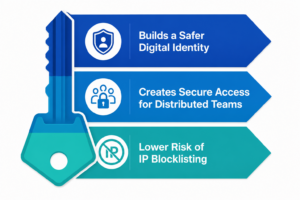
- Builds a safer digital identity:
Cybercriminals use your IP address to track your location and gain access to your personal information through online activities. One of the primary benefits of mobile proxy servers is that they conceal users' original IP addresses by routing traffic through mobile network IPs, making business activity more secure and less vulnerable to cyberattacks. - Creates secure access for distributed teams:
The mobile proxy servers operate independently, so employees accessing devices from different countries with strict internet rules can perform sensitive tasks without risking the company network. - Lower risk of IP blocklisting:
Mobile proxy servers make online activity look ordinary and reliable. The use of mobile proxies reduces the chances of IP addresses being blocked or flagged by websites. A proxy server lessens the possibility of an IP address being flagged or blocked by any website. Therefore, businesses can conduct research and manage accounts very smoothly without frequent access restrictions.
Common Use Cases of Mobile Proxies
Mobile proxy is used for multiple purposes across various digital domains. Here are some common technical applications :
- Mobile SEO Analysis: A mobile proxy helps SEO professionals comprehend mobile search engine rankings and results. It provides an accurate representation of the mobile user experience and enables SEO tools to retrieve mobile-specific SERP information, thereby supporting the overall SEO strategy.
- Ad Verification: Digital marketing agencies responsibilities generally include researching markets, generating leads, and verifying the correct placement and functionality of advertisements. Mobile proxies verify the authenticity of mobile advertisements, with the ultimate goal of reaching as many customers as possible within the target demographic or geographical location.
- Social Media Management: Social media platforms often put limits on the number of accounts a single IP can operate. A shared pool of IP addresses allows businesses to run multiple accounts concurrently, helping avoid triggering spam filters.
- Web Scraping: A mobile proxy is used to extract large amounts of mobile-specific data from target websites or when handpicked websites have strict anti-scraping measures in place. It generally helps prevent the scraper from being hindered and identified.
Wrapping Up!
A mobile proxy is a valuable tool that strengthens businesses. They are known for their higher authenticity and effectiveness in bypassing detection.
Therefore, they are ideal for several functions, from protecting sensitive data from cyber attackers to managing social media content. Their dynamic IPs and high trust factor make them a worthwhile investment compared to other proxy types.
Visit our official website for more such valuable insights.
FAQs
Q1. Are mobile proxies legal to use?
Answer: Yes, they are legal to use, as almost all mobile proxy providers use auto-IP rotation to enhance both anonymity and detection risk.
Q2. What is the difference between mobile proxies and VPNs?
Answer: Mobile proxies work as intermediaries between your device and the internet, by routing traffic through mobile network IP addresses, making traffic appear as it is coming from a mobile device.
VPNs on the other hand, helps protect all data transmitted across internet by creating a secured and encrypted channel between a VPN server and your device, ensuring privacy and data security.
Q3. How do mobile proxies prevent cyberattacks?
Answer: Mobile proxies help reduce cyberattack risks by masking the user’s real IP address and routing traffic through mobile carrier IPs. As a result, attackers find it difficult to identify the original source of the traffic.
Also Read:
Safeguard Your Device: Mobile Security Apps
Continuous Authentication: Securing Mobile Devices Ecosystem